Debonair Corporate Events | April 2026 | By Dwayne Rutherford, DES
Toronto Corporate Event Planning | Corporate Gala | Leadership Offsite | Conference Planning | Executive Retreat | Employee Experience | Year-End Celebration
I have been in this industry for over a decade. I have walked into rooms that cost six figures to produce and felt nothing. I have also walked into rooms that were comparatively modest in budget and felt everything.
The difference is never what you think it is.
It is not the florals. It is not the AV. It is not the venue, though the venue matters. The difference is almost always a decision that was made, or not made, long before any vendor was contracted.
That decision is this: does everyone in this room know what this event is actually supposed to accomplish?
In most cases, the honest answer is no. And everything that follows, every dollar spent, every hour planned, every detail executed, is working against an unclear foundation.
This is not a small problem. It is the central problem in corporate event planning. And it is one that most organizations never realize they have, because the event still runs. The food comes out. The speeches happen. People applaud and go home. And the leaders in the room quietly wonder why the impact they hoped for never arrived.
The difference between an event that fills a room and one that shifts something inside an organization starts before the first venue is toured.
Why Corporate Events Fail Before They Begin
When organizations come to us at Debonair Corporate Events with a request for a leadership summit, a corporate gala, or a year-end celebration, the first thing we do is not talk about venues or timelines. We talk about objectives.
Specifically, we ask: what do you need people to feel when they walk out of that room?
That question makes some clients uncomfortable. They came expecting to talk about menus and staging. They were not expecting to be asked about organizational culture, or about what problem they are actually trying to solve by bringing four hundred people into a ballroom.
But that discomfort is exactly where the good work begins.
I have spent ten years producing events across Canada for clients in financial services, professional associations, crown agencies, and executive leadership. What I have observed consistently is this: the organizations that get the most from their events are not the ones with the biggest budgets. They are the ones who knew what they were building before they started building it.
The organizations that struggle are the ones that confuse activity with strategy. They plan. They execute. They produce. And they walk away with something that was, by every observable standard, a success. But it did not move anything forward. It did not rebuild the trust that needed rebuilding. It did not realign the culture. It did not create the shared context that no internal memo or all-hands call can replicate.
Because those things were never defined as the goal in the first place.
The Five Decisions That Shape Every Corporate Event Outcome

After ten years of producing high-stakes events for discerning clients, I have come to understand that most corporate event outcomes are determined by five decisions, and most of them happen before the planning truly begins.
1. Defining clear objectives
This is not a mission statement. This is a specific answer to a specific question: what does success look like when this event is over? Not for the room. For the business. For the team. For the individual who walks through that door carrying the weight of a year.
When objectives are clear, every decision that follows gets easier. Venue selection becomes a function of the experience you are engineering, not just the capacity you need. The agenda becomes a tool, not a schedule. The guest experience becomes intentional, not incidental.
When objectives are unclear, you spend a great deal of money producing something beautiful that does not actually deliver. And in my experience, that is the most expensive outcome of all.
2. Choosing the right venue
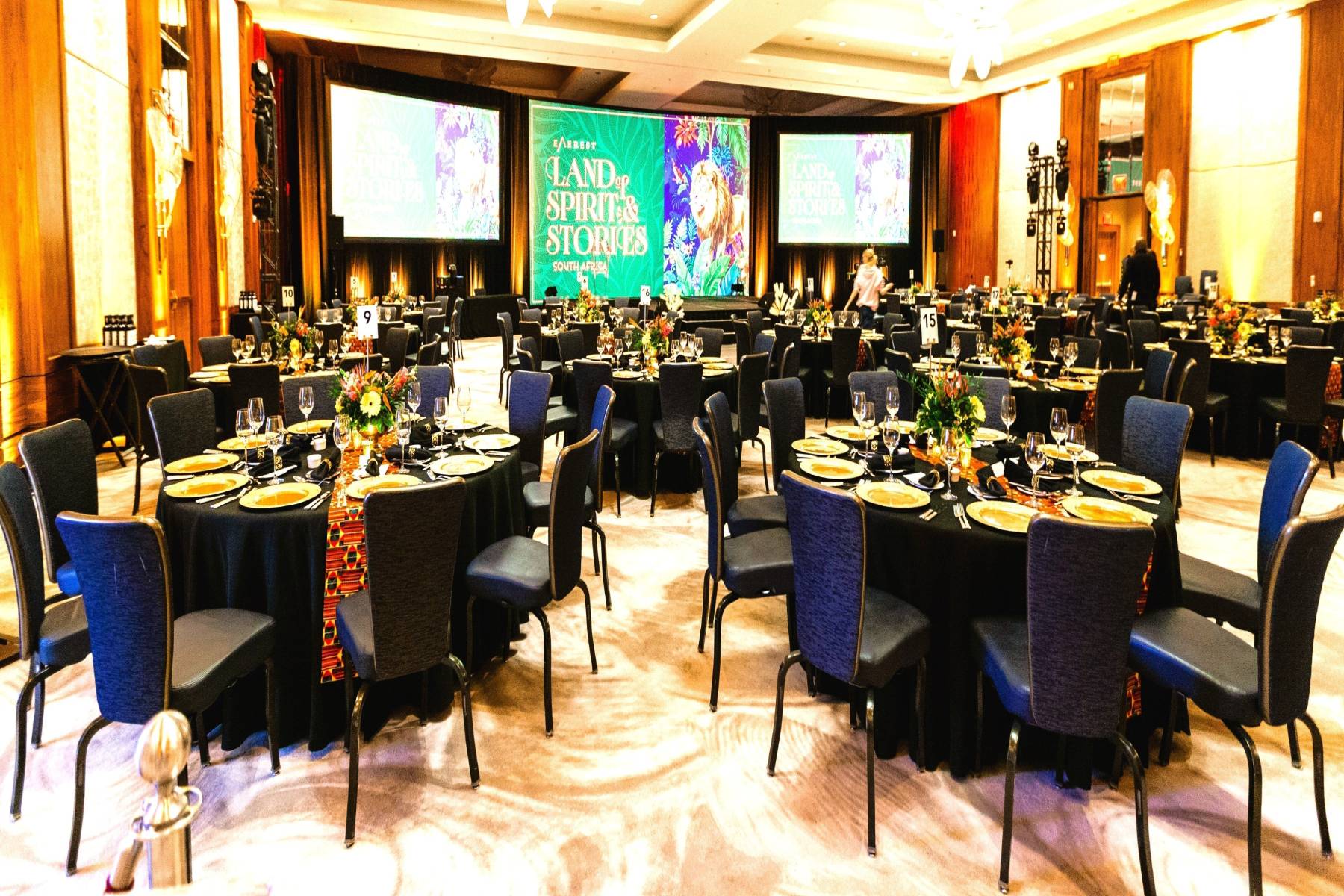
A venue is not a backdrop. It is a participant. The right venue in Toronto, or in Kingston, or in Bridgetown, Barbados, sends a message before a single word is spoken. It tells your guests how much you thought about them before they arrived.
Venue selection done well is a strategic act. It accounts for the sightlines, the flow, the acoustics, the cultural context of the gathering, and the way the space will feel at 9pm when the energy shifts and people stop being polite and start being present.
We have produced events at some of the finest properties in Toronto, across Canada, and in the Caribbean. The most successful were not chosen for their reputation. They were chosen because they were the right answer to a very specific brief.
3. Structuring the agenda with intention
An agenda that simply fills time is one of the most common failures in corporate event planning. Pacing matters. The sequence of moments matters. The spaces between the formal program matter as much as the program itself.
The organizations getting the most from their conferences and leadership off-sites have learned that the agenda is a design problem, not a scheduling problem. You are designing the arc of human attention and energy across a defined period of time. That requires craft, not just coordination.
4. Designing the guest experience from arrival to departure
I walked into a venue at 6am before a major event once and something felt immediately wrong. Not the logistics. Not the setup. The room felt like it had been designed for someone else.
We had 400 guests arriving from multiple countries. Different cultures. Different expectations. Different definitions of what it means to feel welcomed. We had 90 minutes to correct it.
We repositioned the welcome experience entirely. Changed the flow. Adjusted the energy of the room. Added touchpoints that communicated: we thought about you before you arrived.
When guests walked in, something shifted. People exhaled. That is not a metaphor. That is what belonging feels like. And belonging does not happen by accident. It is designed. Intentionally. Or it is missed entirely.
5. Aligning the event with the organization's business priorities
This is the decision that separates the organizations treating events as a line item from the ones treating them as infrastructure.
A well-designed leadership offsite is not a break from the business. It is a strategic investment in the business. It rebuilds trust. It realigns culture. It creates shared context that no email thread, no Slack channel, and no all-hands presentation can replicate.
A year-end celebration designed with intention does not just say thank you. It says: we thought about the people in this room before we thought about the room itself.
The organizations that understand this are asking a fundamentally different question when they start planning. Not: what should the theme be? But: what do we need this gathering to do for our people, and for our business?
Logistics are the floor, not the ceiling. The work that matters happens in the strategic decisions that precede them.
Early Planning Is Not About Rushing. It Is About Creating Room to Make Better Decisions.

Every fall season, I have the same conversation with organizations that are now scrambling for venue availability, compressed timelines, and limited vendor options. They are not bad planners. They simply did not start the conversation early enough to protect their own options.
The organizations planning the strongest year-end events and fall conferences are not waiting until September. They are in early conversations now. Not because they are behind. Because they understand that early planning gives you access to better thinking, better venues, and better outcomes.
At Debonair, we are already in early conversations with a small number of organizations about their fall and holiday events. The window is open. But it does not stay open indefinitely.
If you are planning a leadership summit, an annual gala, or a year-end celebration for your organization, this is the right time to begin the conversation. Not to rush. To give yourself the room to make the decisions that will actually determine whether your event delivers.
What to Look for in a Corporate Event Planning Partner in Toronto and Beyond
This is a question worth answering honestly, because the market is crowded with capable executors. The distinction worth drawing is between a team that can produce an event and a partner who can help you design one.
At Debonair Corporate Events, we operate from a straightforward philosophy: strategy before logistics, every time. We call it Discover. Design. Deliver.
We begin by understanding your objectives. Not the event objectives. The organizational objectives. What is happening inside your company that this gathering needs to serve? What are your stakeholders carrying into that room? What do you need them to carry out of it?
Then we design. Not just the visuals, though we take those seriously. The arc. The experience. The moments people will talk about weeks later, often without being able to name exactly why.
Then we deliver. With the same people who were in the planning conversations. With the same attention to detail at 7am on the day of the event as we brought to the first discovery call.
We serve organizations across Toronto, across Canada, and across the CARICOM region. We bring the same standard of execution to a leadership offsite in Muskoka as we do to a destination conference in Jamaica or Barbados. The geography changes. The commitment does not.
A Final Thought on What Events Are Actually For
I have spent a meaningful part of my career in rooms where I was the only Black professional present. Not as a grievance. As an observation that informs how I think about what events are for.
Events are rooms. Rooms where decisions get made. Rooms where culture gets shaped. Rooms where belonging becomes visible or does not.
When I design a gathering, that responsibility is never far from my thinking. The question is not just how the room looks. It is those who feel considered before they walk through the door.
That is the standard I hold Debonair to. And it is the standard, I believe, every organization should hold their events to.
Because when you get it right, the room does not just fill. It shifts something. And that is exactly what a well-designed corporate event is supposed to do.
If you are planning a corporate gala, leadership summit, conference, or year-end celebration in 2026 or 2027, we would welcome the conversation. Book a discovery call with the Debonair team at debonaircorporateevents.ca.